
07 May 2026 | Thursday | Interaction | By Fintech Business Asia
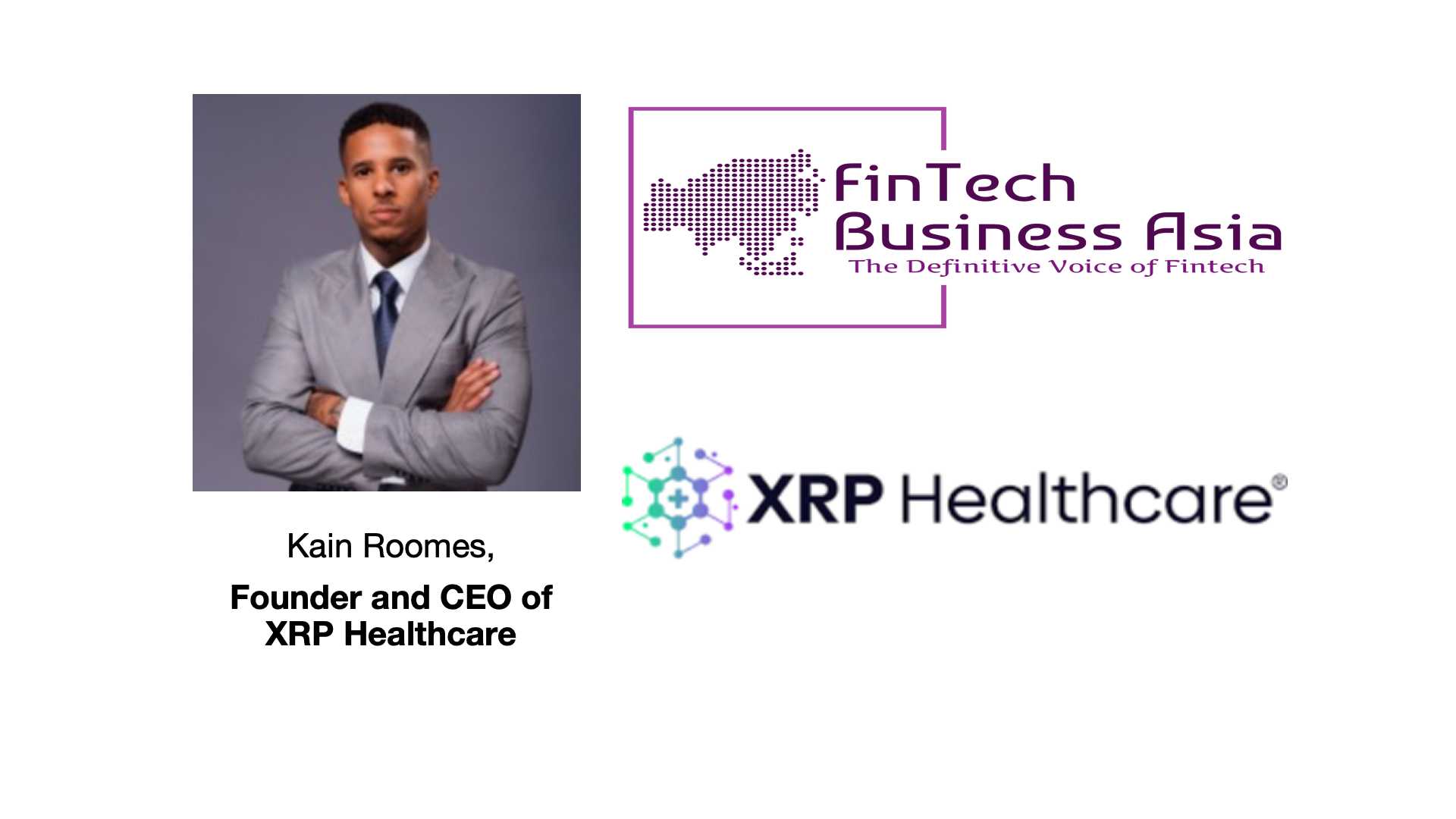
In this exclusive conversation with Fintech Business Asia, Kain Roomes, Founder and CEO of XRP Healthcare, outlines a fundamentally different approach to scaling Web3 healthcare ecosystems. At the heart of the strategy is a dual-layer token model designed to resolve the long-standing conflict between utility and long-term value, alongside the introduction of “Proof of Health™” — a system that incentivises real user engagement without compromising regulatory alignment. As Asia-Pacific emerges as a key growth market for digital assets and mobile-first healthcare, Roomes discusses how AI, blockchain, and tokenised incentives can converge into a sustainable, real-world business model.
Q: XRP Healthcare has introduced a “one ecosystem, two layers” model combining infrastructure and rewards. How does this dual token architecture (XRPH and XRPHAI) improve scalability and user engagement compared to single token models?
A:
The “one ecosystem, two layers” model is central to how XRP Healthcare is designed to scale.
At its core, XRPH functions as the foundational infrastructure layer, representing long term alignment with the ecosystem including access, positioning, and future integration benefits. Alongside this, XRPHAI operates as the utility and rewards layer, directly tied to real user activity within the XRPH AI App.
This separation is not cosmetic, it is structural.
Many Web3 projects rely on a single token model, where one asset is expected to perform multiple roles simultaneously: store of value, transactional medium, incentive mechanism, and ecosystem representation. While this can appear efficient in the early stages, it often creates friction as adoption increases.
The underlying issue is simple: utility introduces velocity and sell pressure, while long term value requires stability and scarcity.
When these forces are combined into a single token, they begin to conflict. As user activity grows and rewards are distributed, the same token that is meant to represent long term value is constantly being circulated, sold, or diluted in perception. This creates structural inefficiencies that can limit scalability.
Our dual layer architecture resolves this.
A key component of this design is token supply architecture:
XRPH has a fixed maximum supply of 100 million tokens, positioning it as a scarce, foundational asset within the ecosystem.
XRPHAI has a fixed maximum supply of 1 billion tokens, enabling scalable distribution as rewards tied to real user engagement.
This separation allows us to expand participation without compromising the structural integrity of the ecosystem.
In practical terms:
XRPH anchors the ecosystem, aligning holders with long term growth, access, and positioning.
XRPHAI powers engagement, flowing through the system as users interact with the platform and earn rewards.
This is comparable to how modern digital platforms separate equity from incentives, or infrastructure from usage layers. It creates clarity between ownership and activity, enabling each component to perform its role effectively.
From a user perspective, participation is rewarded without destabilising the system. From a systems perspective, it enables sustainable growth without structural compromise.
Importantly, XRPH holders are not being displaced, they are being integrated into what comes next. As the ecosystem evolves, holders benefit from enhanced rewards, increased earning limits, and tiered access based on participation and alignment.
This is not two tokens competing. It is one ecosystem, designed to function properly at scale.
Q: With XRPHAI now live on the XRP Ledger and actively rewarding users for health related activities, how do you ensure the integrity and verification of “Proof of Health” data in a decentralized environment?
A:
“Proof of Health™” is a concept designed to bridge real world behaviour with digital incentives. However, for such a system to be credible, integrity must be embedded at every level.
At XRP Healthcare, Proof of Health is not based on arbitrary or self reported data. It is built around structured, verifiable engagement within the XRPH AI App environment.
The integrity of the system is maintained through multiple layers:
Controlled interaction environments, where all reward generating actions take place within the XRPH AI App, allowing engagement to be validated.
AI assisted validation systems, where machine learning models assess behavioural patterns, consistency, and depth of engagement to identify meaningful activity and reduce manipulation.
Time based reward structures, where rewards are not instantly liquid and are earned through completed engagement cycles and unlocked over time.
On chain transparency, with reward distribution recorded on the XRP Ledger, ensuring auditability and trust.
It is important to clarify that Proof of Health does not attempt to validate clinical outcomes, diagnoses, or sensitive medical data on chain. Doing so would introduce unnecessary complexity and regulatory challenges.
Instead, the system focuses on verifying meaningful engagement with health focused behaviours and digital healthcare tools, including wellness sessions, symptom assessments, educational participation, and interaction with AI driven features.
This approach allows the system to remain scalable across global markets, technically efficient, ethically aligned, and compatible with regulatory frameworks.
Ultimately, Proof of Health is designed to encourage proactive health engagement, not replace traditional healthcare systems. It introduces incentives that align user behaviour with better health outcomes, while maintaining a practical and scalable architecture.
Q: The token’s launch on MEXC without any private sale or pre market allocation is unusual. What impact has this transparent, open market listing had on price discovery and investor confidence?
A:
The decision to launch XRPHAI without a private sale or pre market allocation was deliberate.
In today’s digital asset landscape, many projects rely on early stage allocations, discounted private rounds, or pre listing agreements. While these approaches can generate initial funding and liquidity, they often introduce structural imbalances that affect long term market behaviour.
Early participants frequently enter at significantly lower valuations, which can lead to immediate sell pressure once the asset becomes publicly tradable. This distorts price discovery and can undermine confidence among broader market participants.
We chose a different approach.
By launching XRPHAI directly through a public exchange listing:
All participants accessed the token on equal terms.
Price discovery was driven by real time market demand.
There were no early unlock cycles influencing trading behaviour.
This structure reinforces transparency and fairness.
It also aligns with the philosophy behind the ecosystem, where value is derived from participation and utility, rather than preferential access or early positioning.
While this approach may be less conventional, it creates a cleaner foundation for long term growth and supports a more balanced market dynamic.
Q: XRP Healthcare integrates AI driven health assessments with blockchain incentives. How do you see this convergence of AI, fintech, and healthcare evolving into a viable business model at scale, particularly in emerging Asia markets?
A:
The convergence of AI, blockchain, and healthcare represents a significant shift in how digital systems can deliver real world value.
At XRP Healthcare, we are actively building at this intersection.
Our model combines:
AI driven health insights and assessments.
Accessible digital healthcare tools.
Blockchain based incentives tied to real user activity.
This creates a system where engagement is both functional and incentivised.
In emerging markets, including regions across Asia, this model is particularly relevant.
Many of these markets are characterised by:
High mobile adoption.
Fragmented healthcare infrastructure.
Limited access to preventative care.
Rapid digital transformation.
This creates an opportunity for mobile first healthcare platforms to scale efficiently and reach underserved populations.
By integrating blockchain incentives, we introduce an additional behavioural layer that encourages consistent user engagement, preventative health actions, and long term platform retention.
Over time, this model can expand into broader healthcare infrastructure, including digital consultations and telemedicine, pharmacy and prescription integrations, data driven health insights, and cross border healthcare accessibility.
The key factor is alignment.
When users are incentivised to engage with their own health and receive tangible value for doing so, adoption becomes more organic and sustainable.
This is how AI, fintech, and healthcare converge into a viable business model at scale.
Q: As users earn XRPHAI through app based engagement such as wellness sessions and diagnostics, what mechanisms are in place to sustain long term token utility and avoid inflationary pressures within the ecosystem?
A:
Sustainability is fundamental to the long term success of any tokenised ecosystem.
At XRP Healthcare, XRPHAI has been designed with structured mechanisms to ensure balance and longevity.
Key components include:
Controlled emissions, where rewards are distributed in a predictable and structured manner directly tied to real user engagement.
Time based unlocking, where users must complete defined activity cycles before rewards become accessible.
Utility driven demand, where XRPHAI is earned through active participation within the XRPH AI App, not passive holding.
Ecosystem integration, where XRPH holders unlock enhanced rewards, increased earning limits, and tiered access.
In addition, XRPHAI has a fixed maximum supply of 1 billion tokens, and the issuing account has been permanently blackholed, meaning no additional tokens can ever be created.
This ensures supply immutability, protection against inflation through minting, and long term transparency.
The combination of fixed supply, structured distribution, and real utility demand creates a more balanced ecosystem.
Rather than relying on artificial scarcity or unsustainable incentives, the model is designed so that rewards scale with genuine platform usage, supply remains capped, and demand is driven by participation.
This supports long term ecosystem health and avoids the common pitfalls associated with inflationary reward systems.
Q: With plans to expand exchange listings and ecosystem capabilities, how do you see regulatory frameworks, especially in Asia Pacific, shaping the adoption of health focused utility tokens and blockchain based reward systems?
A:
Regulation will play a critical role in shaping the future of blockchain based healthcare and incentive systems.
Across Asia Pacific, we are seeing increasing clarity in how digital assets are categorised, particularly the distinction between speculative assets and utility driven tokens with real world applications. This shift is important, as it creates a clearer pathway for projects like XRP Healthcare that are built around genuine utility rather than financial speculation.
XRPHAI is positioned firmly within this utility driven category. It is not designed as a financial instrument, but as a token that powers engagement within a functioning AI healthcare platform.
As regulatory frameworks evolve across key Asia Pacific markets, we expect continued focus on:
Data privacy and protection.
Digital health compliance and standards.
Responsible implementation of blockchain based incentive systems.
Clear classification between utility tokens and financial products.
Our approach is to build within these frameworks from the outset. This includes prioritising real world use cases, ensuring responsible handling of user data, and designing systems that can adapt across multiple jurisdictions as regulatory clarity develops.
From a strategic perspective, Asia is a key focus for XRP Healthcare.
It is one of the most active regions globally for digital asset adoption and is home to a significant portion of the XRP and XRP Ledger community. The strength and loyalty of this community, combined with high mobile usage and openness to emerging technologies, makes Asia Pacific a natural market for expansion.
As part of our roadmap, we are targeting additional higher tier exchange listings throughout 2026, with a particular focus on exchanges that have strong penetration across Asian markets. This is not only about liquidity, it is about positioning the ecosystem where demand, understanding, and adoption potential are already strong.
The alignment is clear:
A large, engaged XRP community.
High levels of digital asset participation.
Strong mobile first user behaviour.
Growing regulatory clarity around utility driven tokens.
This creates an environment where blockchain based healthcare incentives can be adopted more effectively.
We view regulation in this region not as a barrier, but as a framework that will ultimately support long term credibility, institutional interest, and sustainable growth.







Fintech Business Asia, a business of FinTech Business Review
© 2026 FinTech Business Review. All Rights Reserved.