
29 June 2026 | Monday | Interaction
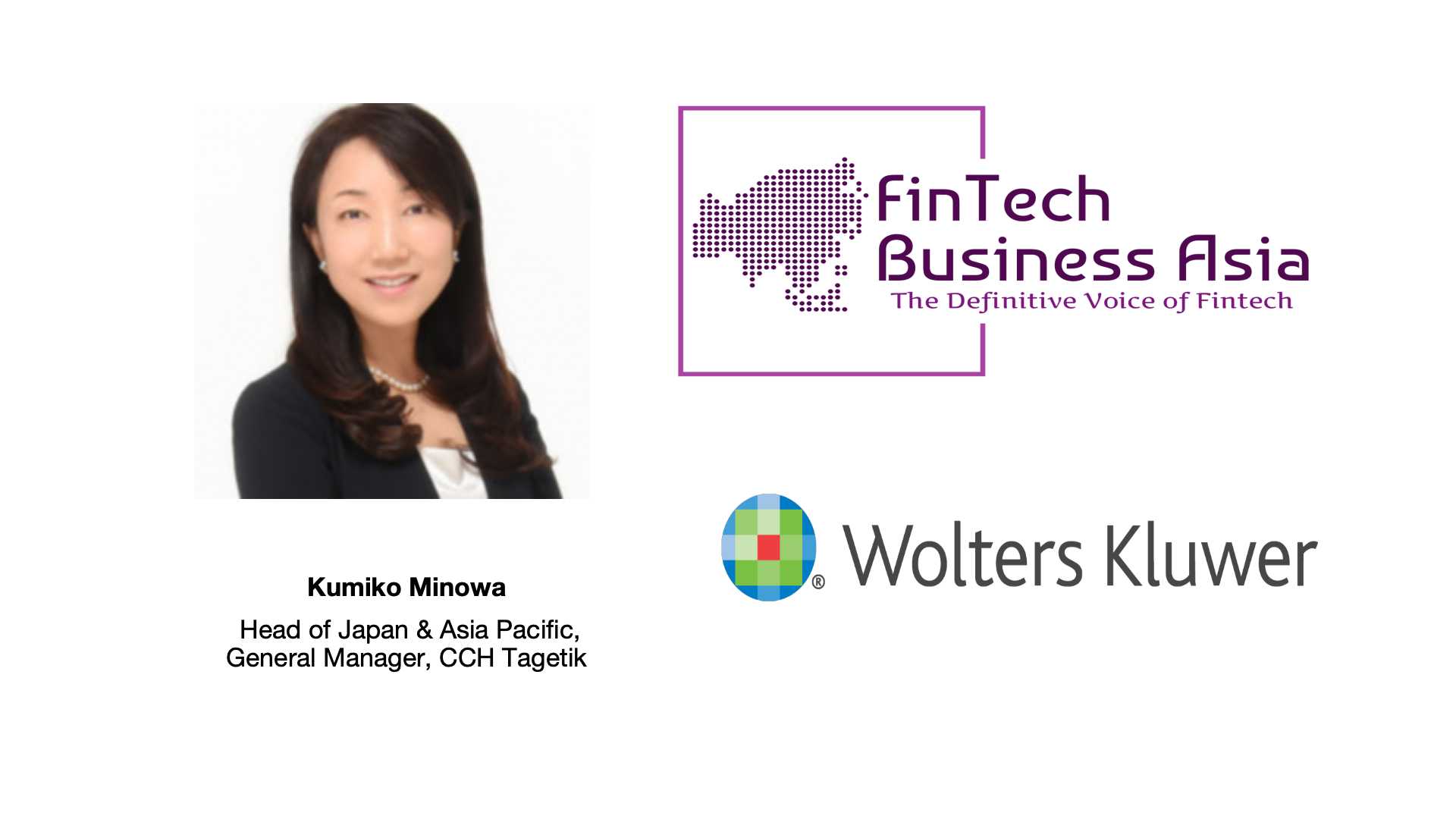
As hospitality businesses expand across markets, finance teams are under increasing pressure to deliver faster reporting, maintain regulatory compliance, and turn growing volumes of operational data into strategic insights. In this interview with FinTech Business Asia, Kumiko Minowa, Head of Asia Pacific and Japan at CCH, explains how AI-powered financial performance management platforms are transforming consolidation, automation, and planning, and why trusted data will be the foundation of the industry's next phase of digital finance evolution.
Q: Banyan Group operates across multiple countries and business units, making financial consolidation a complex process. What were the key reporting and financial close challenges that prompted the organization to invest in CCH Tagetik, and what outcomes were you hoping to achieve?
A: Most organizations do not outgrow complexity. They outgrow the systems they use to manage it.
When organizations reach the scale and complexity of Banyan Group, the challenge is not just the number of entities or geographies. The real issue is how that complexity is managed day to day. Many finance teams are still relying on manual processes, disconnected data flows, and systems that were not designed to support ongoing expansion.
What we typically see is a combination of slow close cycles, difficulty maintaining consistent data quality, and heavy reliance on IT to manage or adapt the consolidation environment. That creates a lack of flexibility at exactly the time when organizations need to respond faster to new reporting requirements and business changes.
Our focus with CCH Tagetik is to help organizations move to a single, AI-powered, unified platform that standardizes consolidation, strengthens controls, and delivers clear, consistent visibility across the business. The goal is to give finance teams a foundation that can support growth and evolving requirements without adding complexity.
Q: In the hospitality industry, timely financial insights are critical for decision-making. How has the implementation of CCH Tagetik improved the speed, accuracy, and visibility of financial reporting across Banyan Group's global operations?
A: Speed only matters if you trust the numbers behind it.
In hospitality, timing matters. Performance can shift quickly across regions, and finance teams need to respond with accurate and consistent data. What we are seeing across the industry is a move toward more integrated processes that reduce delays and improve visibility.
With an AI-powered, unified platform approach that automates key steps in the close and enforces a consistent data model, organizations can reduce manual steps in the close, improve coordination across business units, and apply consistent rules to how data is collected and consolidated. That leads to faster close cycles by about 5 working days for Banyan Group, but just as important, it improves confidence in the numbers.
Visibility is the other key outcome. Finance leaders need a clear and consistent view of performance across the business, not a patchwork of reports that require reconciliation. When data is aligned and accessible, teams can spend less time validating results and more time understanding them.
In Banyan Group’s case, the improvements in close speed and governance are a reflection of this broader shift toward structured, integrated financial management.
Q: As hospitality companies continue to expand internationally, regulatory compliance and reporting requirements are becoming increasingly complex. How does a unified financial performance management platform help organizations navigate these challenges more effectively?
A: You cannot scale a global business on fragmented finance processes.
As organizations expand across markets, complexity increases at every level. Different accounting standards, currencies, and regulatory requirements all need to be managed in a consistent way. When processes are fragmented, finance teams spend too much time reconciling differences instead of managing performance.
A unified platform designed for finance ownership addresses this by bringing consolidation and reporting into a single environment. It allows organizations to apply consistent rules, maintain clear audit trails, and ensure that data is structured in a way that consistently supports both internal management and external reporting requirements.
This is not just about compliance. It is about reducing risk and improving efficiency. When teams are working from a shared framework, they can respond more quickly to new requirements and scale operations without constantly rebuilding processes.
From our perspective, a unified platform is what enables global growth without a proportional increase in reporting complexity.
Q: Automation is transforming finance functions across industries. Which aspects of the financial close and consolidation process have benefited most from automation, and how has this changed the role of finance teams within Banyan Group?
A: Automation shifts finance from processing information to interpreting it.
The biggest impact from automation is in the areas that were traditionally the most manual. That includes data collection, intercompany processing, reconciliations, disclosure management and the coordination of close activities across multiple entities.
By standardizing and automating these steps with a single platform, organizations can significantly reduce cycle times and improve consistency. It also removes many of the bottlenecks that come from manual intervention and dependency on a small number of system experts.
The more important change, though, is how this affects the finance team. When less time is spent preparing data, more time can be spent analyzing it. That shift allows finance to play a more active role in supporting the business, rather than focusing primarily on process execution.
We are seeing finance teams take on a stronger role in performance management and decision support, increasingly operating with a performance orchestration mindset across the business.
Q: The hospitality sector generates vast amounts of operational and financial data. How important is real-time access to data and analytics in supporting strategic planning, investment decisions, and business performance management?
A: Timely data is only valuable if it is also trusted.
Access to timely data is critical, but it has to be reliable. In hospitality, performance varies by region, brand, and even individual property. Decisions around investment, cost management, and operations all depend on having a clear view of what is happening across the business.
A modern platform allows organizations to access consolidated, trusted data more quickly and with greater consistency. That significantly shortens the time between activity and actionable insight, which is important in a fast-moving environment.
At the same time, governance remains essential. Leaders need to trust that the data they are using reflects a consistent and controlled process. Without that, faster access does not translate into better decisions.
When those two elements come together, finance can support more proactive planning and performance management.
Q: Looking ahead, how do you see technologies such as AI, predictive analytics, and intelligent financial planning reshaping finance operations in the hospitality industry, and what role will platforms like CCH Tagetik play in that transformation?
The focus is shifting toward planning with greater confidence, supported by more intelligent and connected planning processes.
We are moving toward a finance model that is more forward-looking. Organizations want to go beyond reporting on past performance and start using data to anticipate outcomes and plan more effectively.
AI and predictive analytics will be an important part of that shift, enabling scenario modeling, predictive forecasting, and more dynamic planning processes. They allow finance teams to model different scenarios, assess potential risks, and support more informed decision-making. This is especially relevant in hospitality, where external factors can have a significant impact on performance.
For these capabilities to be effective, they need to be built on a consistent data foundation. That is where platforms like CCH Tagetik play a role by combining consolidation, planning, and analytics in a single, governed environment.
The result is a more connected finance function that can support both operational and strategic decisions.






Fintech Business Asia, a business of FinTech Business Review
© 2026 FinTech Business Review. All Rights Reserved.