
31 December 2025 | Wednesday | Analysis
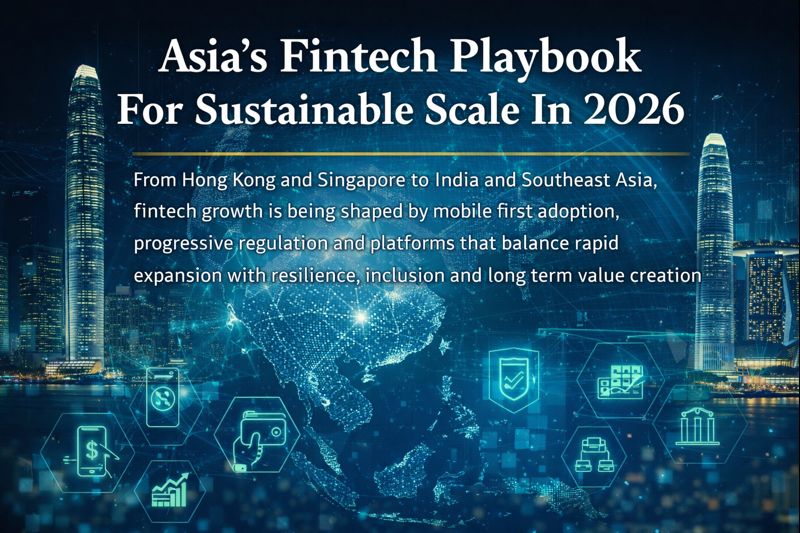
Asia’s fintech scene is surging ahead across all major sectors – digital payments, lending, insurtech, wealthtech and digital banking – driven by high mobile penetration, rising affluence and supportive policies. For example, Hong Kong hosts over 1,100 fintech firms (as of mid-2024) with leading clusters in wealth management, blockchain/crypto and payments. Virtual banks (e.g. ZA Bank, WeLab Bank) and digital insurers (Bowtie) are prominent, alongside a fast-growing crypto/digital-asset industry (e.g. licensed exchanges, HKEX crypto indices). Hong Kong’s strengths include its deep capital markets, “FinTech 2025” policy roadmap and Greater Bay Area connectivity, which bolster wealthtech and cross-border payments. Its fast-payment systems (Octopus, FPS) and high smartphone use also keep digital payments and e-wallets growing steadily.
Singapore is SEA’s fintech hub: about 520 fintech firms (14+ subsectors) and 8 unicorns as of 2025. The payments segment is largest (~20% of fintechs) and so far attracted the most investment (e.g. US$475M in H1 2025 for payments). Singapore’s government has invested heavily in fintech (Digital Banking licences, Smart Nation digital ID, grants and the MAS Regulatory Sandbox). Digital banking is booming: full-bank licences went to Grab-Singtel and SeaBank, and new wholesale/partner banks have launched (e.g. ANEXT, Trust Bank). Rich domestic fintech names include Grab Financial (mobile wallets, BNPL), Razer Fintech and blockchain startups. Singapore also leads in cross-border payments (FinTech Festival focus) and has recently introduced a framework for regulated stablecoins. Virtually all Singaporeans use digital payments daily, and ~66% now bank via mobile-only channels, reflecting very high fintech adoption.
In India, fintech has exploded thanks to its “JAM” stack (JanDhan accounts, Aadhaar ID and Mobile Internet). India accounts for ~14.5k fintech firms and 31 unicorns by 2025. Digital payments are dominated by UPI (₹1.5T monthly, ~657M daily transactions as of Sep 2025) and interoperable wallets (PhonePe, Paytm, Google Pay). India’s lending fintech is strong in consumer and SME credit (e.g. RazorpayX, KreditBee, early BNPL like Slice) backed by the Account Aggregator framework and Open Credit Network (OCEN). Insurtech pioneers (PolicyBazaar, RenewBuy) and wealthtech platforms (Zerodha, Groww, Kuvera) are expanding rapidly. Neobank ventures (Jio Financial’s forthcoming digital bank, Airtel’s Payments Bank extension) leverage telecom networks. The RBI and regulators have actively promoted fintech with digital lending guidelines and sandboxes. Key enablers are India’s massive user base (701M smartphones, 59% mobile-pay users), UPI infrastructure, and government schemes (Jan Dhan financial inclusion). Fintech is also a pillar of India’s rural and social outreach – for example, UPI’s 14+ billion transactions by May 2024 show how fintech is extending to India’s remotest areas.
Indonesia’s large population (270M, 75% internet use) is driving fintech growth, especially in payments and lending. The dominant players are e-wallets (GoPay, OVO, Dana, LinkAja) tied to superapps (Gojek, Grab, Tokopedia, Bukalapak) and payment networks (QRIS, deployed nationwide). Alternative lending (P2P and BNPL) is fast-growing: unicorns like Kredivo (BNPL) and Julo (consumer loans) thrive, and fintech lenders use social-data underwriting for the unbanked. Digital banking is emerging: UOB’s digital bank (“TMRW”) and Bank Jago have large user bases. Indonesia’s fintech space has “four unicorns” (GoTo, Traveloka, Kredivo, Xendit) and a vibrant startup scene. In 2025, Indonesian fintech is broadening into wealthtech (Ajaib, Motif), insurtech (Qoala raised US$47M in 2024) and blockchain; crypto adoption is also top-ten globally with ~14.2M crypto investors (Indodax, Binance-backed Tokocrypto leading). Government digital initiatives (Bi-FAST payments network, pervasive QRIS, OJK’s regulatory framework) continue to modernise fintech infrastructure.
Vietnam’s fintech scene is nascent but growing explosively. As of 2023 roughly 33 million Vietnamese actively use e-wallets (Momo, VNPay, ZaloPay, ViettelPay) and non-cash transactions jumped 50–170% from 2021–23. Vietnam’s Fintech market (payments, lending, neo-banks, etc.) is worth about US$15 billion (2024) and is expected to triple by 2030. Aside from payments, digital banking is maturing: VPBank’s Kiosk (digital arm) turned profitable in 2024, and new entrants (Moca/POSB Neo) are launching. Fintech startups are growing in lending (e.g. Tima), wealth (MFast investments, Finhay savings), and insurtech, though these sectors are still small. Emerging trends include open banking frameworks (Vietnam leads ASEAN), AI/BI analytics in banking, and pilot CBDC work by the State Bank of Vietnam. In April 2025 Vietnam implemented a regulated Fintech Sandbox (Decree 94) covering P2P lending, credit scoring and open APIs. Key drivers are Vietnam’s young, 80%-smartphone population and unified bank e-payments (VietQR). Challenges remain (talent shortages, cybersecurity, and incomplete regulations), but the sector is moving “from promise to scale”.
South Korea has a highly developed, mobile-first fintech market. Smartphone penetration is ~98%, and fintech adoption is high. By mid-2024 there were ~600 fintech companies in Korea. The biggest successes have been digital payments and banking: KakaoPay (embedded in KakaoTalk) and Toss (Viva Republica’s app) reach 20–30 million users each. KakaoBank (launched 2017) now has ~23M accounts, while Toss Bank (launched 2021) turned profitable in 2024. NaverPay holds over 30% of QR-code payments. Wealthtech is emerging (Toss Invest for brokerage), as is insurtech (Carrot – a digital insurer backed by SK/Hyundai ). Korea’s government and regulators foster fintech via a national sandbox (since 2019), Open Banking mandates (bank APIs launched in 2020) and a Digital Finance Transformation plan (2020) to streamline regulations. Virtual assets are popular (Upbit, Korea’s #1 crypto exchange), but authorities regulate them stringently (real-name AML rules from 2021).
Japan is a more conservative yet fast-evolving fintech market. Cash is still widely used, but cashless payments rose from ~27% of transactions in 2019 to ~43% in 2024, as the government pushes digitalization. Popular QR/mobile wallets (PayPay, d-Barai, Rakuten Pay) are expanding alongside traditional credit-card networks. Digital banking is rising via non-banks: e.g. Rakuten Bank, LINE Bank and co-branded “neo-banks” like JRE Bank (JR East–Rakuten) and Takashimaya Neo Bank. Peer-to-peer and retail lending platforms are smaller niches; wealthtech (robo-advisors like WealthNavi) and insurtech (AI-driven policy platforms) are growing. The Bank of Japan has led experiments in a retail CBDC, signaling future digital payments innovation. Regulators (FSA, Ministry of Economy METI) have launched fintech sandboxes and improved open-API rules, but Japan’s fintech growth remains steady rather than explosive due to market conservatism and an aging population.
China (though not the main “playbook” focus here) remains the world’s largest fintech market in absolute terms. It pioneered digital payments (Alipay, WeChat Pay serve ~900M+ users) and launched virtual banks (WeBank, MYbank) and large fintech insurers (ZhongAn). By 2025 China had ~4,253 fintech companies and some 37 unicorns. However, recent policy shifts emphasize “risk prevention” over unchecked growth. China’s central bank issued a Fintech Development Plan (2022–25) under its 14th Five-Year Plan to guide innovation in finance. Regulators (PBOC, CSRC, CBIRC) have imposed stricter oversight (e.g. the 2021 “platform finance” rules), but still encourage technologies like blockchain in banking. In sum, China’s fintech model shows massive adoption and state-led coordination: its lessons (both successes and pitfalls) inform the region’s sustainable-scale agenda.
Hong Kong (HK) – Regulators (HKMA for banking, SFC for securities/VA, IA for insurance) have adopted forward-looking frameworks. The HKMA’s Fintech Supervisory Sandbox (FSS) has allowed hundreds of trials (352 by Sep 2024). HK’s 2025 FinTech Strategy promotes data hubs, AI and tokenisation. Landmark initiatives include stablecoin pilot projects (regulatory consultation on $-pegged coins) and a tokenized green bond issue in 2023. HKMA’s innovation “Project Ensemble” (CBDC and green finance tests) and e-HKD pilots show its sandbox agility. In practice, HK’s sandbox covers banking, securities and insurance, and banks actively partner with tech firms on RegTech and green finance. Meanwhile HKMA has relaxed some rules to admit virtual-asset providers under a licensing regime.
Singapore – The Monetary Authority of Singapore (MAS) strongly backs fintech. MAS runs a formal FinTech Regulatory Sandbox (since 2016) to relax rules for pilot projects. Singapore’s Payment Services Act (2019) streamlined regulation of payments and digital banks. In 2025 MAS introduced a Digital Token Service Provider regime for cryptocurrency service firms. Singapore also supports innovation through grant schemes (e.g. the Financial Sector Technology and Innovation (FSTI) fund), extensive fintech festivals and the MAS Greenprint platform (launched 2023) to facilitate ESG data sharing. Cross-border testbeds (e.g. Project Dunbar for multi-CBDC) further expand Singapore’s sandboxing ethos.
India – Multiple regulators foster fintech sandboxes. The RBI’s Interoperable Regulatory Sandbox (launched 2021) and SEBI’s and IRDAI’s sandboxes allow testing of payments, lending, AI/ML credit models, etc.. India’s unified regulatory push – via the Account Aggregator framework and Digital Public Infrastructure (Aadhaar e-KYC, UPI payments) – lowers entry barriers. The RBI also issues periodic “FinTech Invitations” and hackathons (Finclusion, Innovation Sandbox) for greenfield trials. The Finance Ministry’s 2023 FinTech Committee recommends legislative updates, while the Reserve Bank has published data protection guidelines for fintech. India’s approach emphasizes inclusion (JaDhan Accounts, AePS) alongside regulation: for example, recent digital lending rules mandate transparent loan terms and limit data access, balancing growth with consumer protection.
Indonesia – The Financial Services Authority (OJK) and Bank Indonesia (BI) jointly regulate fintech. OJK oversees non-bank fintech (lending, insurtech, crowdfunding), while BI regulates payments and e-money. Both run sandbox programs: OJK’s Digital Financial Innovation Sandbox has received hundreds of innovation proposals (84 formal consultations, 16 sandbox projects by Apr 2025). BI operates sandbox for payment innovations (incorporating QRIS standards). Recent policy (Financial Law 2023) formally recognized P2P lending under national law. Indonesia has also adopted “tiered” licensing for payment service providers and open finance standards (work-in-progress) to promote innovation under supervision. Overall, regulations are aimed at both consumer protection and inclusion: e-money operators are capped on foreign shareholding, and digital banks (with 85% cap on foreign ownership) are permitted to expand.
Vietnam – Fintech regulation was only recently formalized. In July 2025 the SBV launched its first official Fintech Sandbox (Decree 94/2025) covering banking-sector innovations: P2P lending, credit scoring, and open banking APIs. This is part of a new Payments Services Law (2024) that reorganized licensing of wallets and PSPs. SBV has issued guidelines on QR code payments (VietQR linking all banks/ e-wallets) and is drafting rules for digital banks and crypto assets. Crucially, Vietnam now allows full foreign ownership in wallet companies (up to 100%) since 2021. The push for regulatory clarity – including planned fintech/law commissions – is a key enabler. The new sandbox itself is designed to inform future regulations, reflecting a calibrated approach.
South Korea – The Financial Services Commission (FSC) and Financial Supervisory Service (FSS) run innovation frameworks. Korea’s Regulatory Sandbox (2019–present) has exempted dozens of fintech pilots (initially for new fintech services, expanded to AI and ESG fintech). In 2020 Korea implemented open banking mandates (bank API sharing) and in 2023 passed a Digital Asset Basic Act (awaiting full implementation) to license stablecoin issuers. Payment firms and internet finance are now “comprehensively supervised” under new laws. Regulators also support fintech R&D via the Korea FinTech Center (opened 2018) and dedicated funds. Consumer protection laws (the Electronic Financial Transactions Act) now cover many fintechs, balancing innovation with security.
Japan – Japan’s regulators have moved cautiously but progressively. The Financial Services Agency (FSA) runs a sandbox and innovation-friendly exams. A Joint FinTech Council (government, banks, telcos) issues guidelines for APIs and crypto. The 2020 Payment Services Act expanded e-money definitions and fintech licensing. In 2021 Japan introduced a “sandbox-style” Accelerated Testing Environment for CBDC pilots (with BOJ). Tokyo’s local government also actively promotes fintech (e.g. FinCity.Tokyo initiative). Banks (MUFG, SMBC, Mizuho) have fintech labs and partnerships, and the ministry sometimes issues “regulatory golf-balls” – specific sandbox approvals for things like a cross-border forex platform. Overall, Japan’s framework blends sandbox permits, incremental legal tweaks (especially in payments and data), and large-bank-led innovation.
China – The People’s Bank of China (PBOC) leads fintech policy via multi-year plans (Fintech Dev Plan 2022–25). Unlike other countries, China has no single fintech regulator; instead, sector regulators (PBOC, CBIRC, CSRC) each oversee fintech activities in banking, payments and securities respectively. Sandbox-style pilot zones (e.g. digital currency pilots in Xiong’an, financial innovation zones) have been used for CBDC and blockchain projects. Importantly, China in recent years has instituted “comprehensive supervision” of platform finance: all fintech operations by big tech (payments, lending, etc.) are subject to prudential oversight. This has slowed some fintech verticals but also stabilised the system. The approach emphasizes stability: e.g. regulators have imposed capital requirements on online platforms and data-security mandates. In sum, China’s policy framework is perhaps the strictest in Asia – yet it continues to encourage fintech R&D under the explicit aim of risk control and inclusion.
The following table summarises the key policy and sandbox characteristics:
|
Country |
Lead Regulators / Policies |
Sandbox & Innovation Hubs |
Digital Bank Licences |
Notable Support |
|
Hong Kong |
HKMA, SFC, IA; FinTech 2025 strategy |
HKMA Fintech Supervisory Sandbox (352 trials by 9/24); SFC/IA sandboxes; FinTech Week |
8 virtual banks (ZA, WeLab, etc) |
Government R&D grants; FinTech Connect platform |
|
Singapore |
MAS (Fintech & Payments Act, Open Banking) |
MAS FinTech Sandbox; FinTech Festival; Digital Token SOP (2025) |
3 digital full-bank licences (Grab-Singtel, Sea, trust banks); 2 wholesale |
S$225M API+SGFinDex push; Greenprint data platform |
|
India |
RBI, SEBI, IRDAI, IFSCA; Digital India/Aadhaar-UPI stack |
RBI Sandbox (Interoperable Regulatory Sandbox); SEBI/IRDAI sandboxes |
3 private bank licences (Jio, Airtel & one NBFC bank) announced |
Account Aggregator framework; UPI used globally |
|
Indonesia |
OJK (Fintech clusters), BI (Payments Authority) |
OJK Digital Finance Sandbox (163 consults, 16 apps by 4/25); BI own sandbox for QRIS/e-payments |
2 digital banks (Jenius, Bank Neo) + several neo-bank BOCs |
OJK licensing for P2P, crowdfunding; QRIS QR code standard |
|
Vietnam |
SBV, FSA (draft); Payments Decree 94/2025 |
SBV Fintech Sandbox (effective 7/25) for P2P, credit scoring, APIs |
No dedicated fintech bank license yet; digital banks under law |
VietQR national QR system; UID (once in place) |
|
S. Korea |
FSC/FSS (Financial Innovation Bureau) |
FSC Regulatory Sandbox (200+ pilots since 2019); K-FinTech Center |
3 internet-only banks (KakaoBank, K-Bank, Toss Bank) |
Open Banking APIs (since 2020); FinTech Center Korea (2018) |
|
Japan |
FSA, BOJ (FinTech Strategy Council) |
FSA sandbox; MOF/BoJ FinTech Innovation Hub in Tokyo |
Neo-banks via partnerships (Rakuten Bank, SBI Neo) |
CBDC pilots (BOJ); FinCity.Tokyo initiative |
|
China |
PBOC, CBIRC, CSRC (fintech policy committees) |
PBOC Fintech Pilot Zones (e-CNY trials); cross-ministerial fintech forum |
MyBank (Ant), WeBank (Tencent); other internet banks |
14FYP Fintech Dev Plans; “Comprehensive Supervision” rules |
Across Asia, successful fintech scale-ups share certain enabling conditions:
Yet strategic challenges abound:
“Sustainable” fintech in Asia increasingly means aligning with environmental, social and governance goals, not just growth. Many national strategies explicitly link fintech to inclusion and sustainability. For example, a PwC/ASSOCHAM report on India notes that fintech “not only enables financial inclusion across the remotest corner” but also drives a “sustainable future” by innovating for rural women, the differently-abled and elderly. Elsewhere, fintech firms offer micro-insurance, micro-pensions and agricultural credit (often via mobile channels) to lift unbanked populations. Digital payment innovations (like QR-code cashless tools) have dramatically improved low-income entrepreneurs’ access to formal finance across Asia.
On ESG, fintech can enable green finance and transparency. Hong Kong tokenized its first green bond on blockchain in 2023. Singapore’s MAS launched the GPRNT platform (2023) to digitize ESG reporting. Even lending platforms incorporate environmental criteria: e.g., Philippine’s ChargeSPOT ties EV charging infrastructure financing to green bonds. Banks and fintechs in Asia are also embedding ESG scoring (via AI) into credit/wealth products. Regulation is following suit: Singapore’s sustainable-finance roadmap and India’s RBI require climate-risk disclosure by banks (impacting fintech partners).
In summary, financial inclusion is often a stated objective of Asian fintech policy, and many fintechs incorporate it into their models. According to PwC, India’s UPI and Account Aggregator “dramatically reduce friction” and “spur innovation” that make finance more inclusive. Similar narratives appear in Indonesia’s digital bank schemes or Vietnam’s rural payment QR expansions. By contrast, the environmental aspect is less mature but growing – green fintech (financing renewable energy, ESG credit scoring) is a rising area, especially where governments promote sustainable economies (e.g. ASEAN Green Fintech challenge).
The policy and ecosystem support vary by market, but some patterns emerge. Hong Kong and Singapore, as advanced hubs, offer broad fintech strategies, open markets and multiple sandboxes. India and Indonesia emphasize digital public infrastructure (India’s UPI/Aadhaar; Indonesia’s QRIS) plus multi-regulator sandboxes. Emerging markets like Vietnam and the Philippines are just building their frameworks (new fintech laws and sandboxes), whereas countries like China and Japan combine top-down financial reforms (weaker in Japan’s open innovation but strong state planning in China) with selective fintech liberalization.
The table above encapsulates core differences: for example, Singapore and Hong Kong proactively licence stablecoins and digital banks, whereas India and Indonesia use RBI/OJK as gatekeepers but allow narrow fintech licences (e.g. Paytm Bank, GoPay wallets). All key Asian hubs maintain regulatory sandboxes and fintech taskforces, but the speed and scope differ – Singapore/India/RoW accelerate new models (AI credit scoring, crypto), while Japan/China proceed more gradually. Cross-border initiatives (e.g. Hong Kong–Mainland Wealth Connect, ASEAN cross-border QR codes) show that sustainable scale increasingly relies on regional cooperation.
Asia’s fintech growth to date has been remarkable, underpinned by youthful, connected populations and visionary policy support. Yet the next phase – achieving sustainable scale – demands that fintechs balance expansion with stability, inclusion and environmental responsibility. The insights above suggest that key success factors will be strong tech-regulatory partnerships (e.g. sandboxes turned into clear regulations), customer trust, and alignment with ESG/inclusion goals (green finance, serving the underbanked). Fintech leaders in each Asian market have shown pathways – from Hong Kong’s tokenized bonds to India’s UPI revolution – that future entrants can learn from. The remaining challenges (talent, profitability, cross-border friction) are real, but the region’s track record and current initiatives offer reason for optimism that Asia’s fintech ecosystem can scale sustainably and inclusively in the coming decade.







Fintech Business Asia, a business of FinTech Business Review
© 2026 FinTech Business Review. All Rights Reserved.