
27 July 2026 | Monday | Interaction
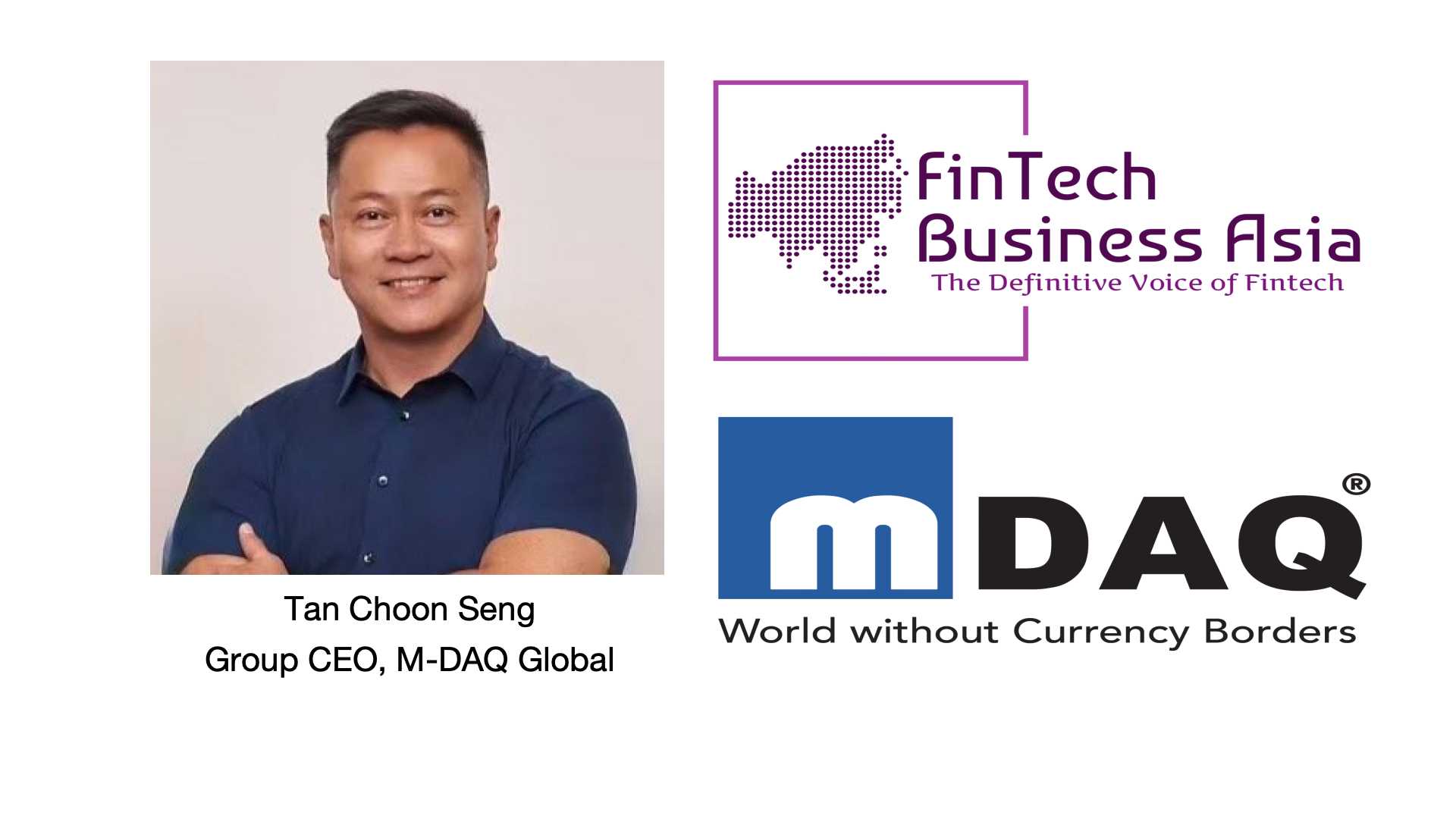
As Southeast Asia's cross-border payments ecosystem enters a new phase of integration, M-DAQ Global is expanding its regional footprint with its first direct presence in Vietnam through the integration of METech. In this exclusive conversation with Fintech Business Asia, Tan Choon Seng, Group CEO of M-DAQ Global, shares why Vietnam is central to the company's ASEAN Payments Hub strategy, how regulatory localisation is shaping its expansion, and what lies ahead for supporting digital businesses and cross-border commerce across the region.
Q: M-DAQ's expansion into Vietnam marks a significant step in your vision of building a unified ASEAN Payments Hub.What strategic advantages does Vietnam offer, and how does this integration strengthen your regional cross-border payments strategy?
A: Vietnam is a critical expansion corridor and is a key pillar for Southeast Asia's broader digital transformation.
Vietnam is growing rapidly as an economy, driven by strong foreign investments and electronics manufacturing growth. This has led to a growth of digital commerce between Vietnam and the rest of the world, and as such, there is a growing need for a stable and reliable payments infrastructure connecting Vietnam to the rest of the world. This is where we see strong synergies between METech and M-DAQ Global.
This integration marks M-DAQ’s first direct presence in Vietnam, significantly deepening our regional footprint alongside prior expansions like EasyPay in Malaysia and Wallex in Indonesia. By combining METech’s local expertise with M-DAQ’s regional scale, we are establishing a far stronger platform for cross-border payment flows, both within ASEAN and between the region and the rest of the world. It directly advances our vision of a unified, interoperable ASEAN Payments Hub that provides integrated collection, FX conversion, and payout capabilities across the region's key trade corridors.
Q: By integrating with METech and gaining direct access to Vietnam's regulated payment infrastructure, M-DAQ reduces its reliance on third-party payment rails. How will this improve speed, cost efficiency, and transparency for businesses operating across ASEAN? METech and gaining direct access to Vietnam's regulated payment infrastructure, M-DAQ reduces its reliance on third-party payment rails. How will this improve speed, cost efficiency, and transparency for businesses operating across ASEAN?
A: Integrating with regulated local infrastructure instead of relying heavily on third parties gives us direct control over key cross-border payment corridors, such as VND flows.
For businesses operating across ASEAN, this delivers direct operational upgrades:
Q:Vietnam is one of Southeast Asia's fastest-growing digital economies, with cross-border commerce expanding rapidly. Which industries or customer segments do you believe will benefit most from M-DAQ's enhanced payment capabilities in the market?
A: The integration is positioned to benefit both international businesses looking to enter the Vietnamese market, and Vietnamese businesses expanding across Asia and beyond. M-DAQ and METech serve highly complementary customer segments, bringing together local payment capabilities with M-DAQ's regional cross-border network enables us to support a wider range of businesses as they expand across markets.
Financial institutions, payment service providers (PSPs), and fintechs stand to benefit significantly, as they can access enhanced local payment capabilities and regulatory connectivity through M-DAQ's infrastructure. This enables them to offer more seamless payment experiences to their merchant and business customers across Vietnam and the wider region.
We see cross-border commerce, particularly e-commerce, as a key growth area. As Vietnam continues to develop as both a consumer market and a global manufacturing and export hub, businesses require payment infrastructure that can support faster, more efficient movement of funds across borders. The combination of local market access and regional connectivity positions M-DAQ to support these evolving payment needs.
Q: With M-DAQ now holding five regulated licences across four ASEAN markets, how important is regulatory localisation to your long-term expansion strategy, particularly as cross-border payment compliance becomes increasingly complex? Localisation to your long-term expansion strategy, particularly as cross-border payment compliance becomes increasingly complex?
A: Regulatory localisation is a fundamental part of our long-term strategy. Navigating Asia's complex and heavily restricted currency corridors cannot be reverse-engineered or replicated overnight. Building sustainable access requires deep local market understanding and infrastructure that is aligned with each jurisdiction's regulatory framework.
METech's local technical and regulatory expertise, coupled with its longstanding banking relationships, provides the essential onshore infrastructure required to securely connect Vietnam to our broader regional platform. By leveraging these capabilities, including PayME's licensed payment service provider framework, M-DAQ can operate within Vietnam's regulated financial ecosystem while providing businesses with reliable access to local payment capabilities.
With five regulated licences across four ASEAN markets, M-DAQ is positioned to help businesses navigate the complexity of cross-border payments without requiring them to build their own local infrastructure in every market. This enables enterprises and financial institutions to expand more efficiently while maintaining confidence that their payment operations are supported by the appropriate regulatory foundations.
Q: You mentioned that digital businesses, including crypto and Web3 platforms, require robust and compliant financial infrastructure to scale. How is M-DAQ positioning itself to support the evolving needs of these next-generation businesses across ASEAN? You mentioned that digital businesses, including crypto and Web3 platforms, require robust and compliant financial infrastructure to scale. How is M-DAQ positioning itself to support the evolving needs of these next-generation businesses across ASEAN?
A: Digital businesses are evolving rapidly, and while M-DAQ does not currently provide services specifically for crypto or Web3 businesses, we recognise that this is an area seeing significant growth and adoption, particularly with the increasing use of stablecoins in cross-border payments.
As part of our long-term strategy, we are investing in capabilities that will enable us to support emerging payment models as the regulatory landscape matures. Our focus is on ensuring our infrastructure remains future-ready while maintaining the high standards of compliance, security, and reliability that underpin our platform.
Today, we already work with a number of crypto and Web3 companies on the fiat leg of their payment flows, providing regulated fiat collection, payout, FX and cross-border payment capabilities. This gives us a strong foundation to support these businesses where traditional financial infrastructure intersects with the digital asset ecosystem, while positioning us to expand our capabilities over time as customer needs and regulations evolve.
Q: Looking ahead, what are M-DAQ's next priorities for expanding its ASEAN Payments Hub, and do you foresee additional market entries, partnerships, or acquisitions to further strengthen your regional network over the next 12 to 24 months? Looking ahead, what are M-DAQ's next priorities for expanding its ASEAN Payments Hub, and do you foresee additional market entries, partnerships, or acquisitions to further strengthen your regional network over the next 12 to 24 months?
A: Our immediate priority is ensuring a seamless integration with METech, maintaining business continuity for our clients, and maximising the value of our expanded presence in Vietnam.
Looking ahead over the next 12 to 24 months, our focus is on continuing to strengthen M-DAQ's ASEAN Payments Hub and expanding our ability to support businesses moving across the region. Our approach has always been driven by strategic outcomes rather than a particular structure. Whether through local partnerships, acquisitions, or other forms of collaboration, we focus on identifying the most effective way to create value for our customers.
As ASEAN's cross-border commerce continues to grow, we will continue to evaluate opportunities that deepen our local market capabilities and strengthen our regional connectivity. The goal is to build a more seamless cross-border payments network that reduces complexity for businesses expanding across the region, while leveraging local expertise and infrastructure in each market.






Fintech Business Asia, a business of FinTech Business Review
© 2026 FinTech Business Review. All Rights Reserved.