
09 November 2026 | Monday | Interview
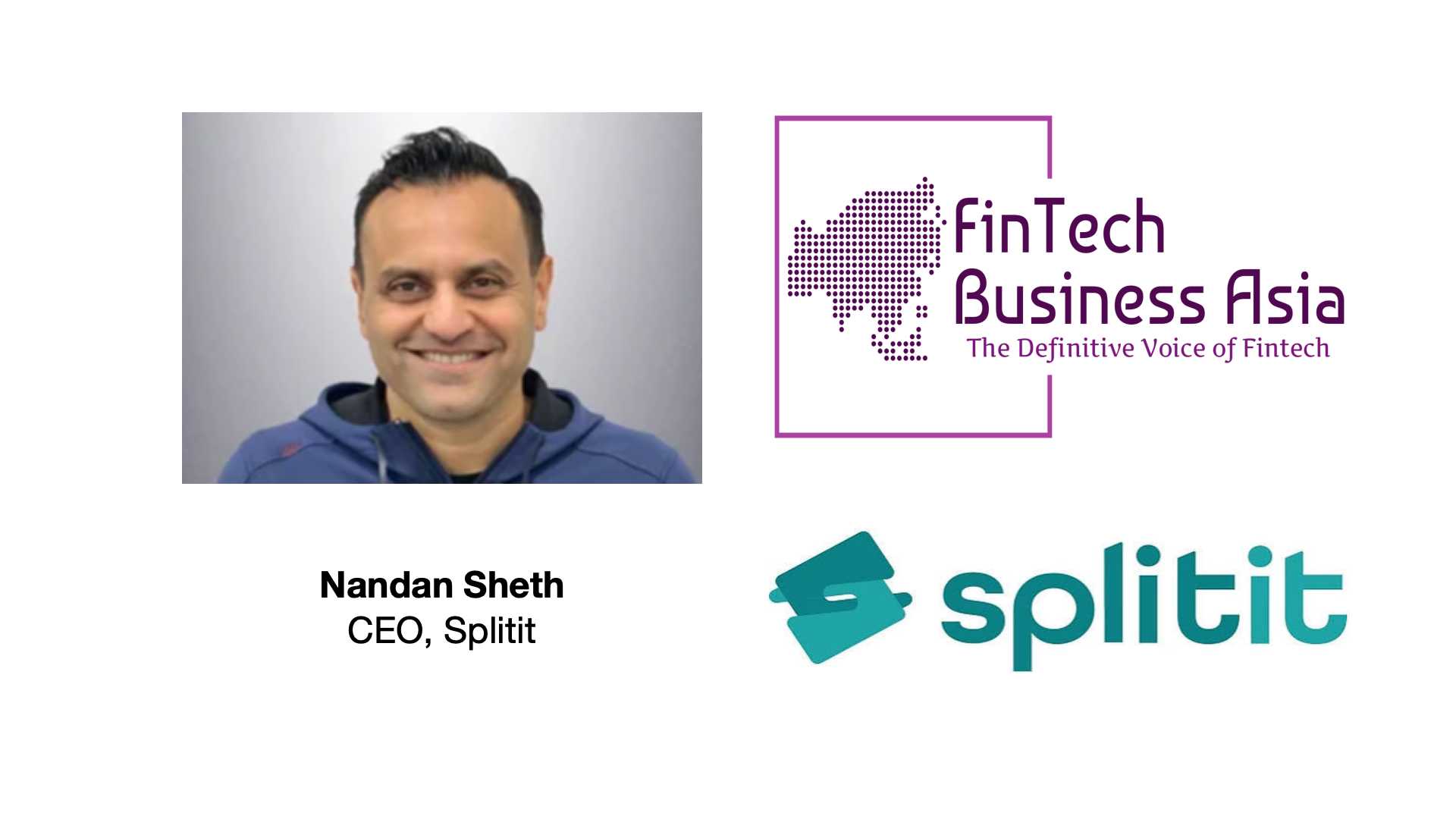
As consumer demand shifts towards flexible, transparent credit options, banks and credit unions face growing competition from fintechs and buy now, pay later providers. In this conversation with FinTech Business Asia, Nandan Sheth, CEO of Splitit, discusses the launch of the Splitit World Mastercard, how its transactional credit model differs from traditional revolving credit, and how the platform aims to help financial institutions strengthen customer relationships, attract younger consumers and bring installment payments into everyday card spending.
Q: Splitit is targeting mid-sized banks and credit unions with a white-label card. What gap in their current credit and payments offering are you trying to address with the Splitit World Mastercard?
A: Mid-sized banks and credit unions are under pressure from two directions at once. National banks have much larger acquisition budgets, and they're using them to win deposit accounts in local markets. Fintechs and buy now, pay later (BNPL) providers are taking consumer financing and, with it, younger customers. The result is market-share erosion and pressure on profitability.
These institutions still hold something valuable: the primary account and the customer's trust. What they often lack is a modern installment product. When their customers want to pay over time, they go somewhere else. Many bankers are surprised by how often this happens. I suggest a simple test: pull a report of the debit and ACH payments leaving your bank for installment providers. Most are stunned to see their own cards being used to pay off someone else's installment loans.
The options available to them today don't solve this problem. Banks and credit unions can launch a traditional credit card program, but that means competing on rewards with institutions many times their size, and every card comes with the same revolving product. They can try to earn more from debit cards or push more auto loans. None of these meets the needs of today's consumer - credit on a set term, at a known cost, for the purchases they choose.
Building that product in-house is slow and expensive. Putting installments on a card has proved harder than it looks, even for issuer processors. Most mid-sized institutions don't have the engineering teams, underwriting capability or budget to do it.
The Splitit World Mastercard fills that gap. It gives a bank or credit union an installment card under its own brand, without starting a lending business from scratch.
Q: The card allows customers to set a spending threshold and automatically convert larger purchases into instalments. How do you expect this model to change the way consumers use credit compared with traditional revolving credit cards?
A: Revolving credit no longer fits how many consumers want to borrow. They still want credit, but they want it on a set term, at a known cost, for the purchases they choose. A revolver works the other way: the balance carries indefinitely, and the consumer pays financing charges on all of it, month after month.
We call our approach transactional credit. The card comes with a credit line, but the cardholder decides purchase by purchase what to pay over time. Everything else is simply paid in full within 30 days, at no cost. There's no revolving balance on the card at all.
The spending threshold makes this easy. Cardholders decide what counts as a big purchase. Anything below their threshold is paid in full at the end of the 30 days, and anything above it can split automatically into fixed monthly payments. They can also set rules by purchase type, convert a purchase after the fact, or switch a plan back to pay-in-full before their statement is due. Each financed purchase is its own plan, with a fixed fee and a fixed term, so the consumer always knows when it ends and what it costs.
This also moves the installment decision away from the merchant's checkout. Today, a shopper can only pay over time if that particular merchant offers a pay-later option. With this card, someone buying a $500 set of tires can split that purchase even if the shop has never heard of installments.
We've also built Finn, an AI assistant, into the bank's app. Finn can spot a larger purchase and offer to split it. It can also push back. It might question putting groceries on installments, or enforce a cardholder's own rule that nothing under $200 gets financed. We don't want to push credit and fees. We want consumers to make the right decisions, and that's what builds lasting trust between a bank and its customers.
Q: Banks keep their own brand and customer relationship while Splitit provides the installment technology and mobile experience. How important is that control for financial institutions that are competing with fintechs and buy now, pay later providers?
A: By control, I mean three things: the card carries the bank's name, the bank owns the customer relationship, and the bank keeps the customer data. That control is essential. When a customer uses a third-party pay-later app instead, all three go to someone else. Banks and credit unions still have their customers' trust. What they've lacked is an installment product, and ours only works if the institution stays in front of its customer.
Every time a customer chooses a third-party pay-later provider, the bank loses more than one transaction. It loses the data, the engagement and a chance to deepen the relationship. Over time, the customer builds a financial relationship somewhere else, and many fintechs now offer savings accounts, loans and other products that compete directly with the bank.
The Splitit World Mastercard is designed so none of that leaves the institution. The card carries the bank's or credit union's brand, built to its own standards. It's embedded in the institution's existing online banking app, so the cardholder experiences it as a product from their own bank. The customer data belongs to the institution. We provide reporting so the bank can see how its customers use installments, and we never cross-market between institutions.
This also gives smaller institutions a way to play offense, beyond defending what they have. A modern card program gives them a reason to attract new customers, especially younger ones. Many younger consumers already have an account at a local bank or credit union, often opened by their parents, while doing their everyday spending elsewhere. A product they actually want to use is how an institution brings that spending back.
We see our role as the fintech for banks. We bring the technology and the expertise in installments. The institution brings its customers, its brand and the trusted relationship it has built over years.
Q: What will determine how issuers structure pricing, credit limits and repayment terms on the card, and how much flexibility will individual banks have to tailor the product to their own customers?
A: A small credit union and a regional bank have very different resources, so we built the program to work differently for each.
The biggest choice is how much of the program the institution wants to run itself. A community bank or credit union can have Splitit provide everything: the technology, underwriting, liquidity, risk management and servicing. A more sophisticated bank can bring its own capital and use us mainly for the technology and the consumer experience. It can also take on some pieces, such as underwriting and risk management, while we handle servicing. Some institutions have asked whether they can start with Splitit as the lender and servicer, then bring the program in-house as it grows. The model allows for that. We run our own issuer processor, and we've built adapters for the larger processors, so a bank can later move the program onto the processor it already uses.
For consumers, the structure is simple. There's no annual fee, no monthly fee and no late fee. Paying in full within 30 days costs nothing. Cardholders who choose to split a purchase over a longer plan, such as six or 12 months, pay a fixed fee that's shown upfront. Splitit shares the economics of the program with its bank and credit union partners, so the institution earns on the installment activity without having to build the product.
Credit limits and terms will reflect the institution's own customers and its approach to risk. Each cardholder gets a credit line for installments, and each financed purchase carries its own fixed term and fee. Beyond pricing, institutions can shape the program around their own customers. They control how the card is branded and marketed, and the platform supports features like pay-with-points or special offers with selected merchants.
Q: Mastercard is providing the global payments infrastructure and acceptance network. How does that partnership help Splitit move beyond merchant-based instalment payments and into everyday card spending?
For more than a decade, Splitit's installments have run through merchants. Thousands of merchants embed our card-linked installments in their checkout, so shoppers can pay over time on the credit card they already have. That model works well, but it depends on the merchant offering it.
The Splitit World Mastercard puts installments on the card itself. The cardholder can use it anywhere Mastercard is accepted and decide whether to split a purchase, whether or not that merchant offers any pay-later option. That's only possible with a global network behind the card, and Mastercard brings that: its payments infrastructure, its acceptance network and its relationships across the financial institution community.
Mastercard is also helping us reach institutions. It's supporting distribution of the card to banks and credit unions, including many that run strong debit programs but have never been able to launch a competitive credit card. Working together, we've identified around 300 priority prospects.
Part of why we chose Mastercard is One Credential, its approach to putting several ways to pay behind a single card. Over time, we see a path to attaching the same installment capability to a bank's existing debit card, without issuing a new one.
Cardholders also get the protections they expect from any Mastercard product, including tokenization, dispute resolution and Zero Liability Protection. For a bank putting its name on a new product, that matters. The card needs to feel as safe and familiar as anything else in the customer's wallet.
Q: You are initially positioning the product for mid-sized financial institutions. Which markets and types of banks do you see as the strongest early adopters, and what would success look like in the first 12 to 24 months?
A: We're starting in the United States, where the need is clearest. The U.S. has thousands of community banks and credit unions, and many of them are exactly the institutions caught between national banks and fintechs. Our strongest early adopters are credit unions, community banks and regional banks that have a loyal customer base and a debit program, but no competitive way to offer installments. We're also seeing interest from fintechs and neobanks that want a ready-made installment card.
The response so far has been strong. Because the program is turnkey, there's no technical project for the institution and very little cost to get started. That lets institutions experiment, which is unusual for a new card program.
Our timeline is concrete. Friends-and-family testing with around 250 consumers begins in December, followed by a beta with about 3,000 consumers. We have three pilot institutions in implementation, which we expect to announce in the first quarter of 2027, and the card will be available to financial institutions in early 2027.
In the first 12 to 24 months, success means three things. First, our launch partners are live, and their cardholders are actively using the card for everyday spending and choosing installments for the purchases that matter to them. Second, institutions see the results they need: more engagement, more spending kept inside their own relationship, and new customers, particularly younger ones. Third, we grow from our pilots into a broad base of banks and credit unions, building on the prospects we've identified with Mastercard.
Outside the U.S., we already work with merchants and partners in many markets, and we'll look at where this model fits next once the U.S. program is proven. The underlying problem isn't unique to America. Wherever banks hold the customer relationship but fintechs own the installment moment, there's an opportunity.




Fintech Business Asia, a business of FinTech Business Review
© 2026 FinTech Business Review. All Rights Reserved.